Best GPU Under $400 in 2026: RTX 5060 Ti 8GB Is the Clear Pick
This guide contains affiliate links. If you buy through them, we may earn a commission at no extra cost to you.
The best GPU under $400 in 2026 is the RTX 5060 Ti 8GB, available from ~$375. It's the fastest card in this price bracket: about 15% faster than the RTX 5060 at 1080p, and 23% faster at 1440p. That widening gap at 1440p is the core reason to push for the Ti if your budget allows.
The catch applies to every fast card in this bracket: they all ship with 8GB VRAM. At 1440p in demanding 2026 titles, that starts to matter. Here's the full picture.
Disclosure: Some links on this page are affiliate links. If you buy through them, MaxMyBuild earns a small commission at no extra cost to you. Prices and availability change frequently; check current listings before buying.
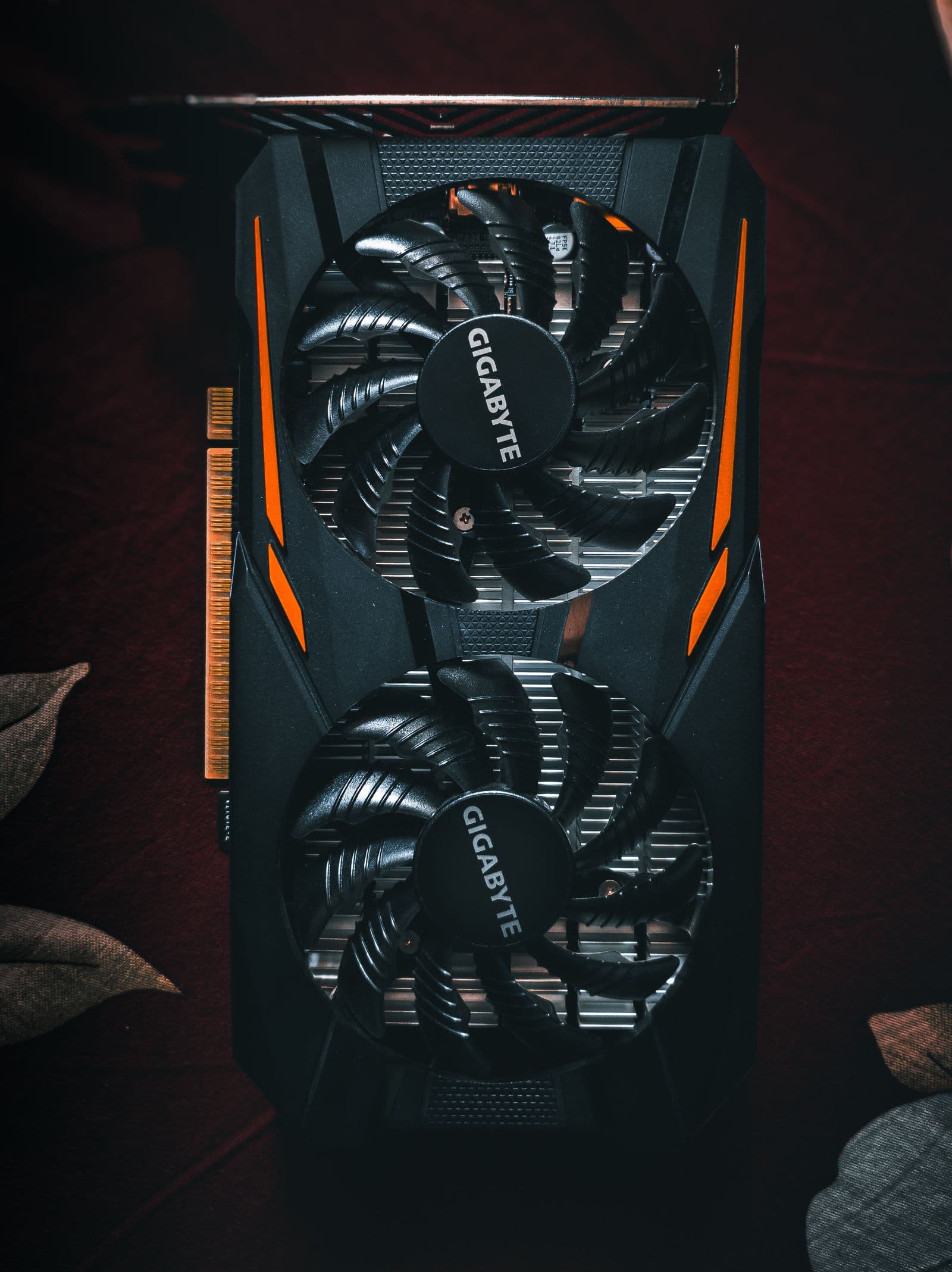
GPU Under $400 at a Glance
All prices are approximate retail street prices, not MSRP. Check current listings before buying. GPU prices move frequently.
| GPU | VRAM | 1080p Score | 1440p Score | Lowest Price | Best For |
|---|---|---|---|---|---|
| RTX 5060 Ti 8GB | 8GB | 58.9 | 39.2 | ~$375 | Best overall under $400 |
| RX 9060 XT 8GB | 8GB | 55.7 | 36.1 | ~$360 | Strong 1440p, lower power draw |
| RTX 5060 | 8GB | 51.2 | 31.8 | ~$340 | Best value if $375 is over budget |
| Arc B580 12GB | 12GB | 41.4 | 30.2 | ~$310 | Best VRAM under $350, slower overall |
| RX 9060 XT 16GB | 16GB | 58.4 | 40.9 | ~$430 | Above $400, best 16GB option near this tier |
| RTX 3070 | 8GB | 47.3 | 31.8 | ~$364 | Skip: previous gen, 220W draw |
| RTX 3060 12GB | 12GB | 35.5 | 24.4 | ~$300 | Skip: old architecture at poor value |
Scores are normalised performance indexes derived from Tom's Hardware benchmarks. Higher is better. Prices are approximate street prices and subject to change; check current listings before buying.
For a full ranked performance-per-dollar view, see the GPU price-to-performance benchmark chart. If your budget is closer to $300, see the best GPU under $300 guide. For the $200 tier, see the best GPU under $200 guide.
The Best GPU Under $400: RTX 5060 Ti 8GB at ~$375
If you have $375–400 available, the RTX 5060 Ti 8GB is the pick. The ASUS Dual RTX 5060 Ti OC starts at $399.99 on Amazon; the GIGABYTE RTX 5060 Ti WINDFORCE OC is available at $374.99 at B&H. At 1080p, the RTX 5060 Ti scores 58.9, which translates to roughly 100–120 fps in most demanding AAA titles at high settings, and 144+ fps in competitive games that are lighter on hardware. At 1440p, a score of 39.2 means 60–80 fps in demanding AAA titles at high settings, and 100+ fps in less graphically intensive titles.
What separates the Ti from the standard RTX 5060 is not just clock speed. The Ti uses a wider memory bus on the same Blackwell GB206 die, which produces the outsized 1440p advantage. The RTX 5060 scores 31.8 at 1440p against the Ti's 39.2. That 23% gap is larger than the 15% gap at 1080p and reflects a genuine architectural difference in memory bandwidth under heavier workloads.
The RTX 5060 Ti also supports DLSS 4 with Multi Frame Generation, NVIDIA's AI upscaling tech. In supported titles, this can effectively double or triple rendered frame rates with minimal visual quality loss. At 1440p, DLSS 4 Quality mode is hard to distinguish from native in most games, meaning the real-world 1440p experience on the RTX 5060 Ti is better than the benchmark score alone suggests.
Power draw is 180W. A 650W PSU handles this with margin alongside a modern mid-range CPU. See the TDP and PSU sizing guide for specifics.
The Runner-Up: RX 9060 XT 8GB at ~$360
The GIGABYTE RX 9060 XT Gaming OC 8GB at $359.99 is the second-best card in this bracket. Its 1080p score of 55.7 and 1440p score of 36.1 put it 6% behind the RTX 5060 Ti at 1080p and 8% behind at 1440p. That gap is real but not dramatic. In practical gaming, the difference is 5–8 fps at 1440p.
Two reasons to choose the RX 9060 XT 8GB over the RTX 5060 Ti:
Power draw. The RX 9060 XT 8GB pulls 150W versus the RTX 5060 Ti's 180W. Over a gaming session, that 30W difference is audible in fan noise and visible in heat output inside the case. In smaller form-factor builds with limited airflow, the AMD card runs cooler and quieter.
Platform preference. If you're building on an AMD platform or already use AMD tools like FidelityFX Super Resolution 4 (FSR 4), Radeon Software, or Adrenalin, the RX 9060 XT 8GB fits cleanly. FSR 4 is AMD's answer to DLSS 4 and delivers competitive upscaling quality in supported titles.
The 8GB VRAM is the same constraint as on the RTX 5060 Ti. At 1440p with high textures in VRAM-hungry games, you will occasionally need to drop to medium textures. This applies equally to both cards.
If $375 Is Over Budget: RTX 5060 at ~$340
The PNY RTX 5060 OC starts at $339.99, with most AIB models between $340 and $395. At 1080p, a score of 51.2 means strong performance: roughly 90–110 fps at high settings in demanding titles. The RTX 5060 is a fast 1080p card. Where it shows its limits is at 1440p, where it scores 31.8: that puts it 15 fps behind the RTX 5060 Ti in demanding 1440p scenarios, and that gap compounds at higher refresh rates.
If 1080p is your primary target (1080p/144Hz competitive gaming, for example), the RTX 5060 at $340 is a legitimate pick. The performance-per-dollar at 1080p is better than the RTX 5060 Ti since you spend $35 less for only 15% less 1080p performance. But for 1440p gaming as a primary target, the RTX 5060 Ti is the more defensible choice.
The RTX 5060 runs 145W, which is 35W less than the RTX 5060 Ti and slightly easier on smaller PSUs and builds with less thermal headroom.
Is the RX 9060 XT 16GB Worth Stretching To?
The RX 9060 XT 16GB currently sells for ~$430, sitting just above the $400 cutoff. Its benchmark scores are 58.4 at 1080p and 40.9 at 1440p, nearly matching the RTX 5060 Ti 8GB at 1080p and actually edging ahead by a small margin at 1440p (40.9 vs 39.2).
The 16GB VRAM changes the 1440p calculation completely. At 1440p with high or ultra textures, 16GB removes the ceiling that causes stuttering in 8GB cards. Some of the most texture-heavy titles available today, including Assassin's Creed Shadows, Black Myth: Wukong, and Indiana Jones and the Great Circle, already benefit from VRAM headroom above 10GB at 1440p, and upcoming titles like The Witcher 4 are expected to push requirements further once they arrive. If 1440p gaming with maximum texture settings on demanding titles is the goal, the RX 9060 XT 16GB at $430 is the better long-term purchase than any of the $360–375 options.
The counterargument: $430 is $55 above the RTX 5060 Ti, and the raw performance uplift at 1440p is marginal (5%). If texture quality at max settings is not a priority for the games you play, the RTX 5060 Ti 8GB is the smarter choice.
Cards to Skip at This Budget

RTX 3070 (~$364): The RTX 3070 scores 47.3 at 1080p and 31.8 at 1440p. At $364 in 2026, that positions it between the RTX 5060 and RX 9060 XT 8GB on performance while pulling 220W, which is 70W more than the RTX 5060 Ti. The RTX 3070 is previous-generation Ampere architecture with no DLSS 4, no hardware AV1 encode, and no Resizable BAR support at the same level as current-gen cards. Paying $364 for a 5-year-old GPU when the RX 9060 XT 8GB exists at $360 is not a trade worth making.
RTX 3060 12GB (~$300): The 12GB VRAM looks appealing, but a 1080p score of 35.5 means the RTX 3060 12GB is slower at 1080p than the RX 7600 at $290. The Arc B580 at $310 outperforms it at both resolutions with the same 12GB. The RTX 3060 12GB belongs in 2023 build guides, not 2026 ones.
RTX 4060 (~$350–430): If you see RTX 4060 models in this price range, skip them. The RTX 5060 at $340 is faster at both 1080p and 1440p, newer-generation, and available for less money. The RTX 4060 was a weak value card when it launched, and it has not gotten better as the 5060-series arrived.
8GB VRAM at the $400 Tier: What You Need to Know
The most common question about the $375–400 GPU tier in mid-2026 is whether 8GB VRAM holds up. The honest answer depends on where you're gaming.
At 1080p, 8GB is fine for the vast majority of titles. Texture-heavy games like Alan Wake 2 and Hogwarts Legacy push close to 8GB with ultra textures at 1080p; dropping to high textures resolves the issue. For competitive games and most AAA titles at high settings, 8GB is not a bottleneck at 1080p in 2026.
At 1440p, the answer changes. More games exceed 8GB at high-to-ultra textures at 1440p than at 1080p. You will encounter texture pop-in or quality downgrades in some 2026 titles when using 8GB at 1440p ultra settings. For most games at 1440p high settings, 8GB is still adequate, but the ceiling is closer than it was at 1080p.
The broader trend is predictable: as game budgets grow, so does texture memory demand. A card you buy today at 8GB will show more VRAM-related compromises by 2027–2028 than a 16GB card would. That context is why the RX 9060 XT 16GB at ~$430 is worth considering if the budget allows and 1440p gaming is the primary use case.
For a deeper look at VRAM across resolutions and GPU tiers, see the VRAM guide.
The $400 GPU in a Full Build Context
A GPU at $375 needs to be matched to the rest of the build to perform well:
- PSU (power supply unit). The RTX 5060 Ti 8GB draws 180W; the RX 9060 XT 8GB draws 150W. Combined with a modern mid-range CPU at 65–125W, a 650W PSU covers either card with headroom. See the TDP and PSU sizing guide to confirm your power supply is correctly rated.
- CPU. At the $400 GPU tier, the GPU is the performance bottleneck in almost all games. A Ryzen 5 7500F, Ryzen 5 9600X, or Core i5-14600K delivers the CPU throughput needed for these cards without bottlenecking them at 1080p or 1440p. An i3-12100F or Ryzen 5 5600 also works for 1080p; at 1440p the CPU matters less anyway since the GPU is always the limit.
- Resolution target. The RTX 5060 Ti 8GB and RX 9060 XT 8GB are both genuine 1440p cards, the first generation of sub-$400 GPUs where 1440p at 60+ fps in demanding AAA titles is a reasonable expectation at high settings. That represents a meaningful step forward from the $300 tier, where 1440p is more of a stretch than a primary target.
If you want a full parts list matched to your budget and the GPU you're considering, the PC Builder at MaxMyBuild generates a compatible build with CPU, motherboard, RAM, storage, PSU, and case at live pricing.
For a broader view of GPU selection across all price points, see the GPU buying guide. For every GPU ranked by benchmark score and current price, see the graphics card rankings.