How to Test Your PC After Building: The Complete Checklist
This guide contains affiliate links. If you buy through them, we may earn a commission at no extra cost to you.
A build that boots to a desktop and a build that actually works aren't the same thing. Windows can load fine on a system with a loose RAM stick, a GPU that artifacts under load, or a CPU cooler that isn't making proper contact, and none of that shows up until something demands full performance. Testing catches these problems on day one instead of during a ranked match three weeks in.
Work through the checks below in order: BIOS recognition, Windows verification, then stress tests for the CPU, GPU, and RAM. Most first builds clear everything in under an hour. If you're still working through the initial build itself, finish that first: this guide picks up once you've got a working boot into Windows.
Some links on this page are affiliate links. If you buy through them, MaxMyBuild earns a small commission at no extra cost to you.
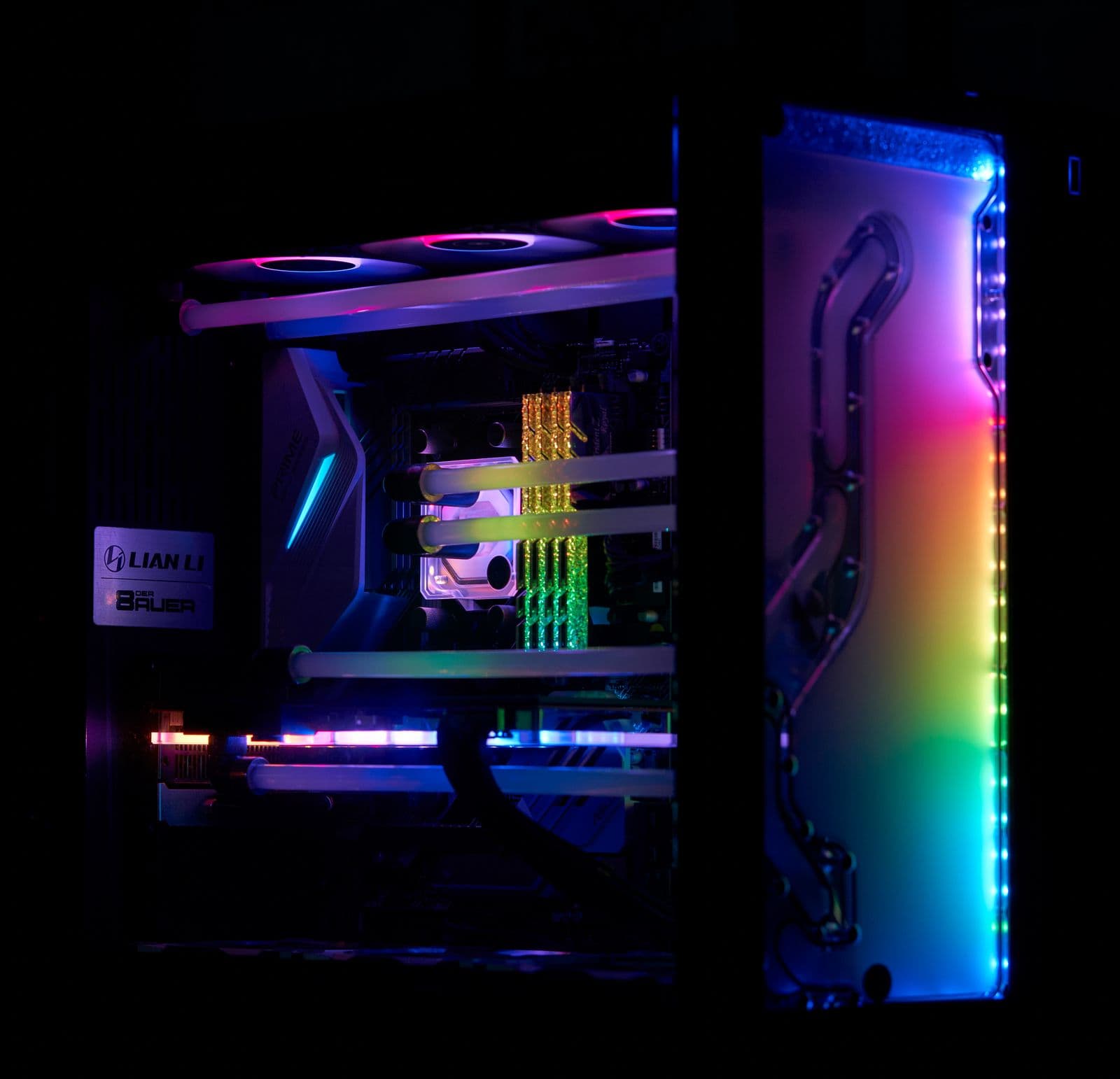
Check BIOS First: Confirm Every Component Is Recognized
Before Windows ever loads, BIOS already knows what's installed. Restart the PC and enter BIOS (usually Delete or F2 during boot, see the how to enter BIOS guide if the timing gives you trouble), then check three things on the main screen: the CPU model matches what you bought, the RAM shows your full installed capacity at the correct speed, and every drive you connected appears in the storage list.
A RAM stick that's seated in the wrong slot or not fully clicked in will often show up here as half your total capacity, well before Windows gives you any indication something's wrong. The same goes for a drive that isn't detected: it means a loose SATA or NVMe connection, not a dead drive, in the vast majority of cases.
If you enabled XMP or EXPO for your RAM's rated speed, confirm it actually applied. RAM defaults to a slower JEDEC speed until XMP or EXPO is turned on manually in BIOS, and it's an easy step to forget on a first build.
Verify Every Component in Windows Device Manager and Task Manager
Once you're in Windows, open Task Manager's Performance tab. It lists your CPU model and core count, total RAM installed, GPU model, and every connected drive with its capacity. Compare each line against your actual parts list. A mismatch here, like a GPU showing as a generic display adapter instead of its actual model, means a driver hasn't installed yet rather than a hardware fault.
Device Manager catches a different class of problem. Open it and look for any entry with a yellow warning triangle, which flags a component Windows can see but doesn't have a working driver for. This is normal immediately after a fresh Windows install and gets resolved once you install chipset, GPU, and motherboard drivers from the manufacturer's site.
One drive detail catches people off guard: a "1TB" drive will show as roughly 931GB in Windows. That's not a shortage or a bad drive. Storage manufacturers use decimal gigabytes (1,000,000,000 bytes) while Windows reports in binary gibibytes (1,073,741,824 bytes) but labels them "GB." Every drive from every brand does this.
Stress Test the CPU First
Run Cinebench 2024's multi-core benchmark on a loop for at least 20 to 30 minutes. It's free, it pins every core at full load, and it's the fastest way to expose a CPU cooler that isn't mounted correctly. Prime95's small FFT test works too and pushes harder, though it runs hotter than anything you'll see in actual games.
| Signal | What it means |
|---|---|
| Sustained load, temps settle in the 70-85°C range | Normal for a properly mounted air or liquid cooler under full load |
| Temps climb past 90-95°C and the clock speed visibly drops | Cooler isn't seated correctly, thermal paste is missing or uneven, or fans aren't spinning |
| System crashes, reboots, or blue screens mid-test | Stop and check CPU power cable seating before anything else, then reseat the cooler |
| Cinebench score is far below published results for your CPU model | Power limits may be set wrong in BIOS, or the cooler isn't making full contact |
If temps run high, pull the cooler, check that thermal paste made even contact across the whole CPU lid, and reseat it with firm, even pressure. A cooler mounted at a slight angle is one of the most common causes of a first build running hotter than it should. The how to apply thermal paste guide covers how to clean off the old paste and reapply it correctly before you reseat.
Stress Test the GPU Next
3DMark's Time Spy Stress Test runs the same benchmark loop repeatedly and flags instability automatically, which makes it the simplest option if you don't mind the free version's feature limits. FurMark is the harder alternative and pushes GPUs to near-worst-case power draw. Either one for 20 to 30 minutes is enough to catch a real problem.
Watch the screen itself, not just the numbers. Artifacting looks like flickering textures, strange colored specks, or geometry that briefly breaks apart, and it points to a GPU that's failing, overheating, or not getting stable power. A driver crash that blacks the screen and recovers on its own usually means a driver issue rather than dead hardware: update to the latest driver from AMD or NVIDIA directly and try again.

Modern gaming GPUs commonly run in the 65-80°C range under sustained load, with some high-end cards designed to run warmer by default. What matters more than the raw number is whether the card throttles, meaning its clock speed drops to manage heat. If it does and your case has decent airflow, reseating the card in its PCIe slot and confirming all its power connectors are fully latched is the first thing to check.
Test RAM With a Dedicated Memory Test
RAM errors are a uniquely frustrating problem because they often don't crash anything during normal use. Instead they cause random, hard-to-reproduce issues: a game that occasionally crashes to desktop, a file that gets corrupted during a copy, or a blue screen that happens once a week for no obvious reason. A dedicated memory test catches this before it becomes a mystery you're troubleshooting months later.
MemTest86 is the standard tool. It's free, boots from a USB drive outside of Windows, and tests RAM directly rather than relying on Windows to report errors. Let it run at least one full pass, which typically takes a few hours depending on your capacity and speed: running it overnight is the easiest way to get two or more full passes without babysitting it.
Any reported error means stopping and isolating the problem. Test one stick at a time in the slot your motherboard manual recommends for single-stick operation, which narrows the fault down to a specific stick or a specific slot rather than leaving you guessing.
Confirm Storage Drives Show Correct Capacity and Health
Open Disk Management (search "Create and format hard disk partitions" in Windows) and confirm every drive shows up with roughly the capacity you paid for, accounting for the GB-versus-GiB difference covered earlier. A drive that's missing entirely here, as opposed to just showing a smaller number, points back to a loose connection rather than a dead drive.
CrystalDiskInfo is a free tool that reads a drive's SMART health data and reports a plain status of Good, Caution, or Bad. It also confirms an NVMe SSD is running in the interface mode it's rated for. Run it once after building and keep it around: it's useful for catching a drive that's starting to fail long after the build is finished, not just on day one.
What Your Results Mean: When You're Done vs. When to Keep Troubleshooting
| Result | Next step |
|---|---|
| BIOS and Windows show correct specs, all stress tests pass with normal temps, no MemTest86 errors | Build is confirmed solid. Move on to games, drivers, and everyday use |
| High temps but otherwise stable | Reseat the cooler and check thermal paste application, then retest |
| Crashes, blue screens, or reboots during stress testing | Stop and troubleshoot: check power cable seating first, since that's the most common cause of instability under load |
| GPU artifacts or storage shows as missing or wrong capacity | Reseat the affected component in its slot and confirm every power connector is fully latched |
| Nothing responds at all, or BIOS won't load after reseating everything | Head to the PC won't turn on after building guide for a full diagnostic walkthrough |
Frequently Asked Questions
What should I do immediately after building a PC? Boot into BIOS first and confirm it shows the correct CPU, the full RAM capacity, and every drive you installed. Then boot into Windows, check Task Manager and Device Manager for any unrecognized hardware, and run a CPU, GPU, and RAM stress test before you trust the build with anything important.
How do I know if I built my PC correctly? Open Task Manager's Performance tab and confirm it lists the correct CPU model, the full RAM amount at the right speed, the correct GPU, and every drive you installed. Check Device Manager for yellow warning icons, which flag unrecognized hardware. If everything matches your parts list and nothing shows an error, the build is correctly assembled.
Should I stress test my PC after building it? Yes. A build that boots and runs Windows fine can still crash under real load from games or rendering work. Stress testing the CPU and GPU for 20 to 30 minutes each surfaces loose seating, bad thermal paste application, and marginal power delivery before they show up during something you care about.
How do I tell if I fried my motherboard? A fried motherboard typically shows no standby LED, no response when you short the power switch pins directly, and no reaction to the PSU paperclip test passing. If BIOS won't load and reseating the CPU, RAM, and power cables changes nothing, the board is the likely cause. Confirm the PSU is good first since that's a more common failure.
If any of these tests reveal instability rather than a clean pass, the diagnostic guide linked above covers the most common causes in more detail, from power cable seating to a full checklist. If you're planning a build and want to skip straight to parts that are already confirmed to work together, the PC Builder at MaxMyBuild checks compatibility automatically before you buy anything.